Eagle Meadow (Extracting the Essence of Flowers)
Oct 16, 2026
A vignette by David Crow, L.Ac.
It is late July in the Sierra Nevada, and spring has just arrived in Eagle Meadow.Trees, cliffs and snowfields tower in majestic proportions. Undulating between powerful blasts and soft caresses, the wind flows down the valley, carrying the sounds of birds singing with unusual joy. The sun blazes then hides behind massive translucent formations of weightless ivory drifting regally through the sky. Like nepenthe, the legendary ambrosial intoxicant of ancient Greece that brought sweet relief from sorrow, the intense clarity of the mountain air produces an exhilaration of the heart that lifts the veils from the mind and senses.
Throughout the meadow, wildflowers are growing. Following patterns of water, warmth, wind and earth that only they comprehend, the flowers spread across gentle green contours and along damp rivulets, climbing up embankments, carpeting the forest floor and clinging to cliffs. Golden yellow, blood red orange and flaming bold vermilion, they blossom with ecstatic abandon, exploding their seeds into the waiting mossy soil. Feathery turquoise lilac and pink lavender pearls hide in the shade, while milky rose fuschias dance among myriad shades of coral and white. Around the base of soaring fragrant cedars, incandescent ultraviolets mingle with indigo jasmine blues, as honey amber creams trickle through cracks in rocks, accentuated by tiger bronze starbursts and lichen rust browns.
It was in places like this that Himalayan yogis once practiced the art of metok chulen, “extracting the essence of flowers.”
“Extracting the essence” (chulen) of flowers (metok) is one of many chulen practices that have been performed by ascetic hermits and lay people of Asia through the ages to cure diseases, promote longevity, and refine consciousness. During the practice of metok chulen, seekers of health and wisdom fast in the solitude of alpine meadows and other natural places, cleansing and rejuvenating themselves with medicinal pills prepared from flowers. Other types of chulen methods included the preparation and use of essences derived from herbs and medicinal plants, minerals, waters, and even stones.
Metok chulen was brought to Tibet from India in the eleventh century by the yogi Padampa Sange, who is reputed to have lived to the age of 572. The teachings of this tradition are preserved in calligraphed and woodblock-printed manuscripts; one of the earliest of these texts was composed in the fifteenth century by the second Dalai Lama. This ancient lineage survives to this day, and flower pills are still produced by some Tibetan doctors and pharmacies using ingredients from the forests, mountain valleys, and hillside gardens.
There are said to be three levels of spiritual maturity among metok chulen practitioners. The lowest are those who practice simply to cure a physical ailment. Mediocre students are those who undertake the disciplines due to poverty or a lack of food and clothing. The superior disciple is one who possesses a strong sense of worldly renunciation and has no desires other than to go beyond all suffering. Those who perceive the inherent misery of cyclical existence, and realize that even the greatest pleasures of the gods are ephemeral and meaningless, are practitioners of the highest caliber; these yogis have a natural disinterest in materialistic possessions, and love the life of solitude in their yearning for nirvana. Those who believe they can purify their negative karma simply through the suffering of asceticism, those who wish to practice because of miserliness and those seeking fame are considered below the level of inferior students, and not given teachings.
According to the traditional instructions, flower pills are to be prepared on an astrologically auspicious day when the flowers are in full bloom. The yogi first bathes and dresses in clean clothes, then visualizes Avalokiteshvara, the Bodhisattva of compassion, while reciting the six-syllable mantra, Om mani padme hum. Following this invocation he collects flowers that have medicinal virtues beneficial to his bodily temperament, such as rhododendron for a phlegmatic constitution. These are dried slowly in a shady place, so as to preserve their fragile essences and active ingredients. Once the flowers have dried, they are carefully ground into powder and mixed with roasted barley flour. The powders of other medicinal herbs are then added, according to the condition of one’s health; commonly used ingredients include myrobalan fruit, sandalwood, nutmeg, saffron, and aquillaria wood. Honey or molasses is added to the finished dry mixture. From this sticky mass, pills the size of sheep droppings are made, which are then placed in a sacred container such as a skull cup or jewel box.
When the yogi is ready to commence the practice he retires to a solitary location, cleans the retreat shrine, arranges offerings on the altar and then consecrates the flower pills. Beginning with the traditional preliminary practices, he takes refuge in the three jewels of the Buddha, the Sangha, and the Dharma, raises his mind with altruistic motivation to release all beings from suffering, and fills the universe with boundless love and compassion. The pills are then blessed by reciting the “mantra of emptiness:” Om svabhava shudo sarvadharma svabava shuda hum.
The yogi then visualizes that he becomes the goddess White Vajra Yogini. Resplendent with ornaments of bones, jewels and instruments of power, she gazes into the emptiness of space while dancing upon a corpse, inviting the lineages of Gurus and Buddhas to gather like clouds. In this form, the practitioner imagines that the essences of the five universal elements, the spiritual merit of all beings, the majestic qualities and excellent glories of the world are absorbed into the pills as rays of light, transforming them into ambrosia of uncontaminated wisdom. Maintaining this contemplative vision, the yogi utters the secret mantra of the goddess one thousand times and completes the consecration by blowing on the pills.
There are many methods, prayers, and visualizations taught in the numerous lineages of metok chulen. The most basic procedure for consuming the pills is for those who wish to gain its lowest benefit, that of ridding the body of diseases. For this purpose, the practitioner again transforms himself into the goddess, recites her mantra, then crushes a pill and swallows it. The pills are consumed three times a day, at dawn, noon, and dusk, with hot water, light tea, or porridge, depending on the practitioner’s level of strength. As the yogi swallows the pills he envisions that they fill the body with blissful nectar.
Ordinarily, this practice is prescribed for a length of twenty-one days. With the exception of light tea and the flower pills, all solid food is to be avoided during this time. During the first week, the meditator begins to lose attachment to food; during the second week numerous diseases vanish; and during the third week, strength is regained. While engaged in metok chulen, yogis are advised to apply themselves to gentle devotional practices and light physical exercises that open the circulation of pranic life force, but to avoid strenuous exertion, which may create new diseases. At the end of the third week, the fast is broken by taking one bowl of dilute porridge; this is continued daily for a week, gradually increasing the amount and variety of food until one has become accustomed to a normal diet again. Nutritious and heavy foods like meat and dairy should not be consumed immediately after this practice, because of their potential to cause digestive stagnation.
Numerous benefits are attributed to the practice of metok chulen. Among these are alleviation of diseases and physical ailments, restoration of youthful vitality and rejuvenation of immunity. Because the needs of the body are greatly reduced one is freed from economic restraints; by avoiding improper forms of livelihood, one is able to achieve realizations of various spiritual practices. Wisdom deepens, intellectual powers are increased, and one becomes loved by all.
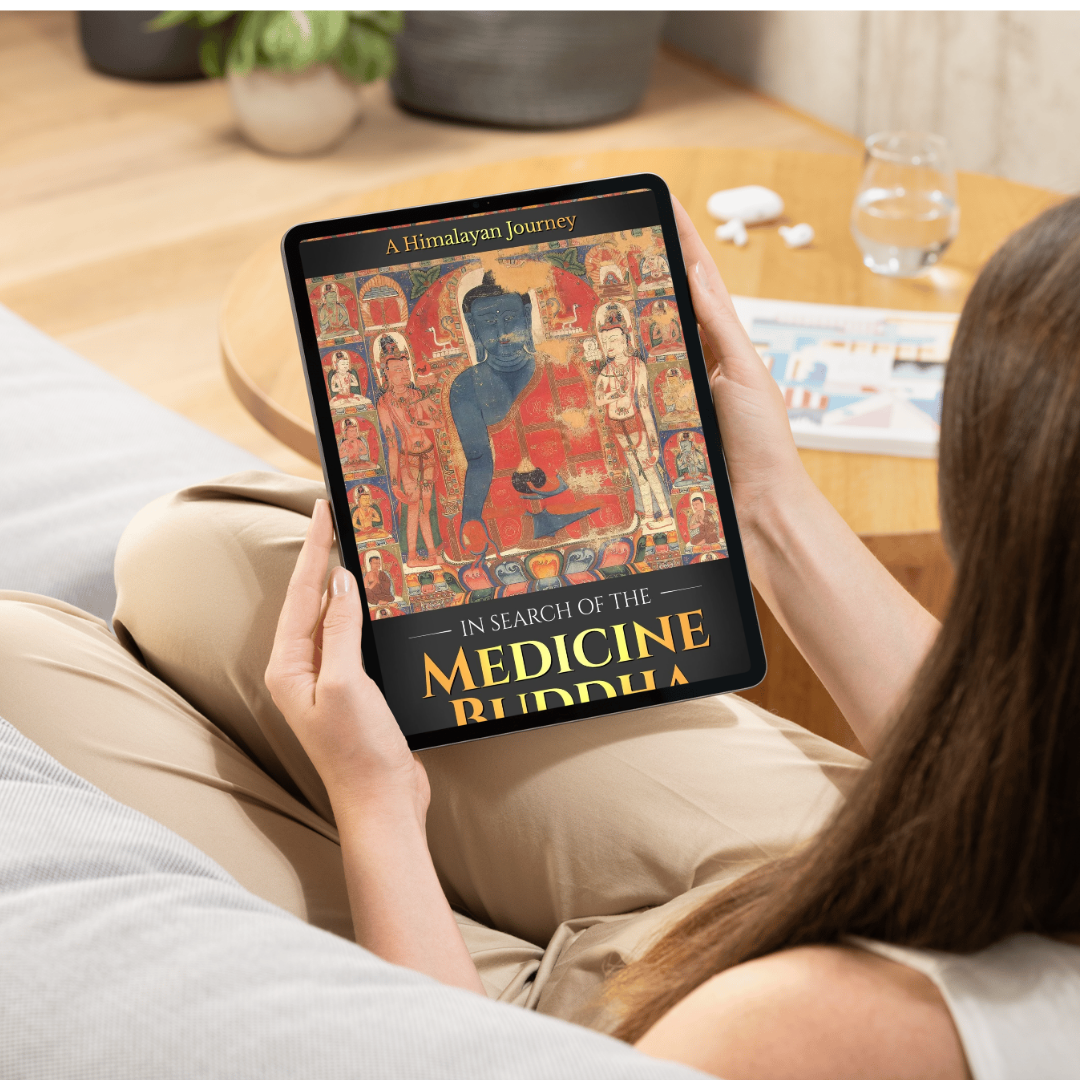
For more of David Crow's writing, we are happy to announce the release of the 25th Anniversary Edition of his flagship novel In Search of the Medicine Buddha. The eBook is available now!