
A Holiday Libation to Nourish Your Qi
Dec 04, 2025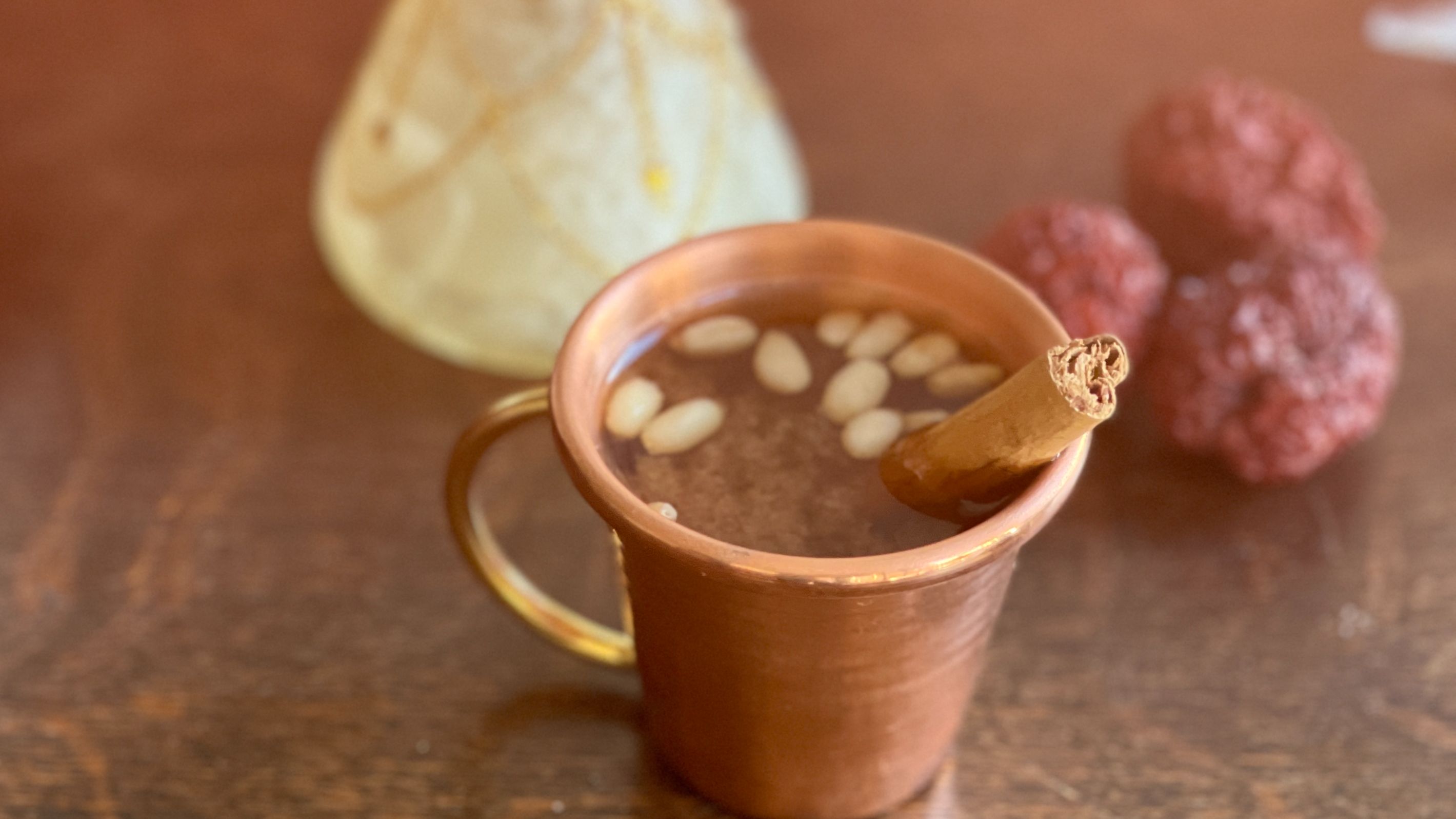
By Karen Wang, Certified Nutritionist & Chef
This traditional health tonic, known as daechu cha, is a staple in many Korean households. It has a long history dating back some 2,000 years, when jujube dates (Ziziphus jujuba) were introduced to Korea from China.
Throughout Asia, the health benefits of jujube dates are well-known.
This is also a very festive drink for the winter holidays that is naturally sweet, mildly spicy, warming to the body, and fabulous for nourishing your qi.
According to TCM, jujube dates have been used to improve sleep and to reduce anxiety. Indeed, animal studies have shown that specific saponin compounds contained in the fruits have a beneficial sedative effect. [1]
Other health benefits, derived from recent research, confirm the long-held observation among cultures that regularly consume jujubes that this crimson fruit may improve cognitive function, immunity, and gut health. [2]
Note: Jujube dates (often called red dates, or Chinese dates) are not actually dates. They belong to the Rhamnaceae, or Buckthorn family. Wild jujube kernels have been found in three sites on the Qi River basin of northern China, dating to the Neolithic period.[3]
Ingredients:
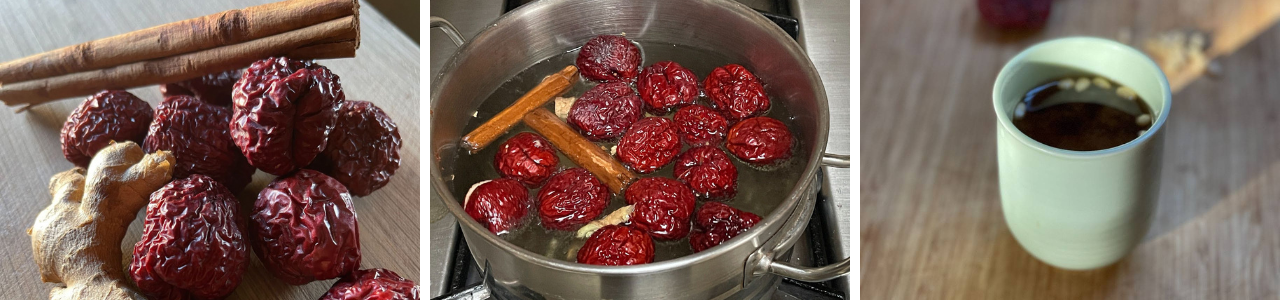
12 - 15 (6 oz.) dried whole jujube dates
2 inches (0.75 oz) fresh ginger root, cut into slices
2 cinnamon sticks (Cinnamomum verum is the best variety to use)
6 cups filtered water
Pine nuts, as garnish, optional but highly recommended
Instructions:
- Using a small paring knife, cut a slit into each jujube.
This step helps to release more flavor and nutrients as they simmer.
- Place all the ingredients into a medium pot and bring to a boil. Immediately reduce the heat to low and simmer for one hour with the lid on. The jujubes will become very soft, and your kitchen will be permeated with the wonderful aromas of ginger, cinnamon, and ziziphus!
- When an hour has passed, turn off the heat and let the mixture rest for 30 minutes.
Then strain the liquid into another pot or large (non-plastic) bowl.
- Using a wooden spoon or the back of a rolling pin, gently push onto the cooked jujubes to extract the soft pulp, through the strainer into the strained tea. Keep pressing until most of the pulp is pushed through. You will need to scrape the underside of the strainer as you go along.
( The skin, ginger slices, and cinnamon stick are left inside the strainer. Please compost.)
- Reheat the strained liquid mixed with the pulp to serve hot.
Daechu cha is traditionally served piping hot with a few pine nuts added in.
You can store this in a glass jar in the fridge for up to a week.
Resources:
For organic jujube dates:
For organic cinnamon verum sticks:
References:
- Shi GB, Wu Q, Zhang B, Sun XH, Zong WT, Zhao XR, Xin Y, Zhao QC, Chen YF. Possible mechanism involved in the sedative activity of jujubasaponins I in mice. CNS Neurosci Ther. 2013 Apr;19(4):282-4. doi: 10.1111/cns.12070. Epub 2013 Feb 20. PMID: 23421937; PMCID: PMC6493547.
- Lu Y, Bao T, Mo J, Ni J, Chen W. Research advances in bioactive components and health benefits of jujube (Ziziphus jujuba Mill.) fruit. J Zhejiang Univ Sci B. 2021 Jun 15;22(6):431-449. doi: 10.1631/jzus.B2000594. PMID: 34128368; PMCID: PMC8214949.
And don't forget, from now until January 1st you can save 25% off everything on the site with the code 25off2025!

